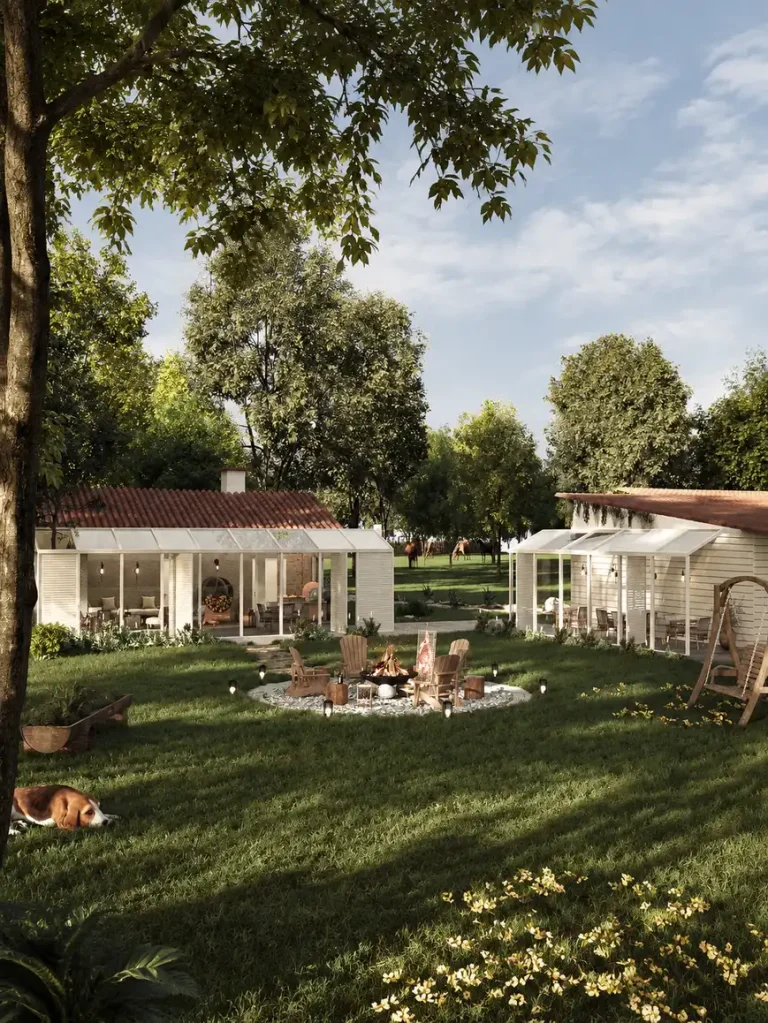
تصویر پروژه La Madreselva

La Madreselva

  • کاربری: اقامتی-گردشگری
  • موقعیت: آرژانتین
  • زمان پروژه: 1404
  • فعالیت های انجام شده: طراحی
  • مساحت زمین: 25273 مترمربع
  • مساحت کل: 25273 مترمربع

Layers of Transparency

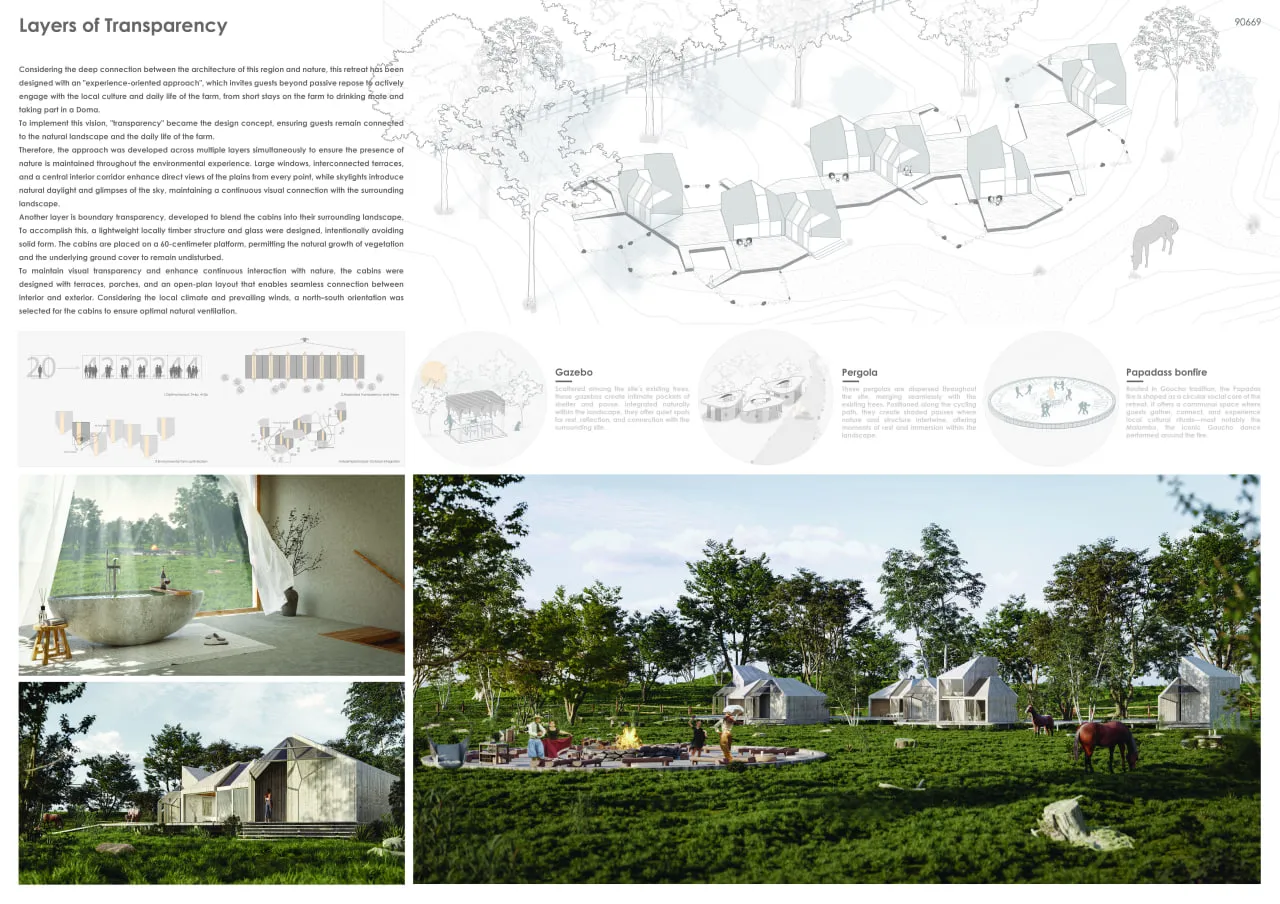
Considering the deep connection between the architecture of this region and nature, this retreat has been designed with an “experience-oriented approach”, which invites guests beyond passive repose to actively engage with the local culture and daily life of the farm, from short stays on the farm to drinking mate and taking part in a Doma.

To implement this vision, “transparency” became the design concept, ensuring guests remain connected to the natural landscape and the daily life of the farm.

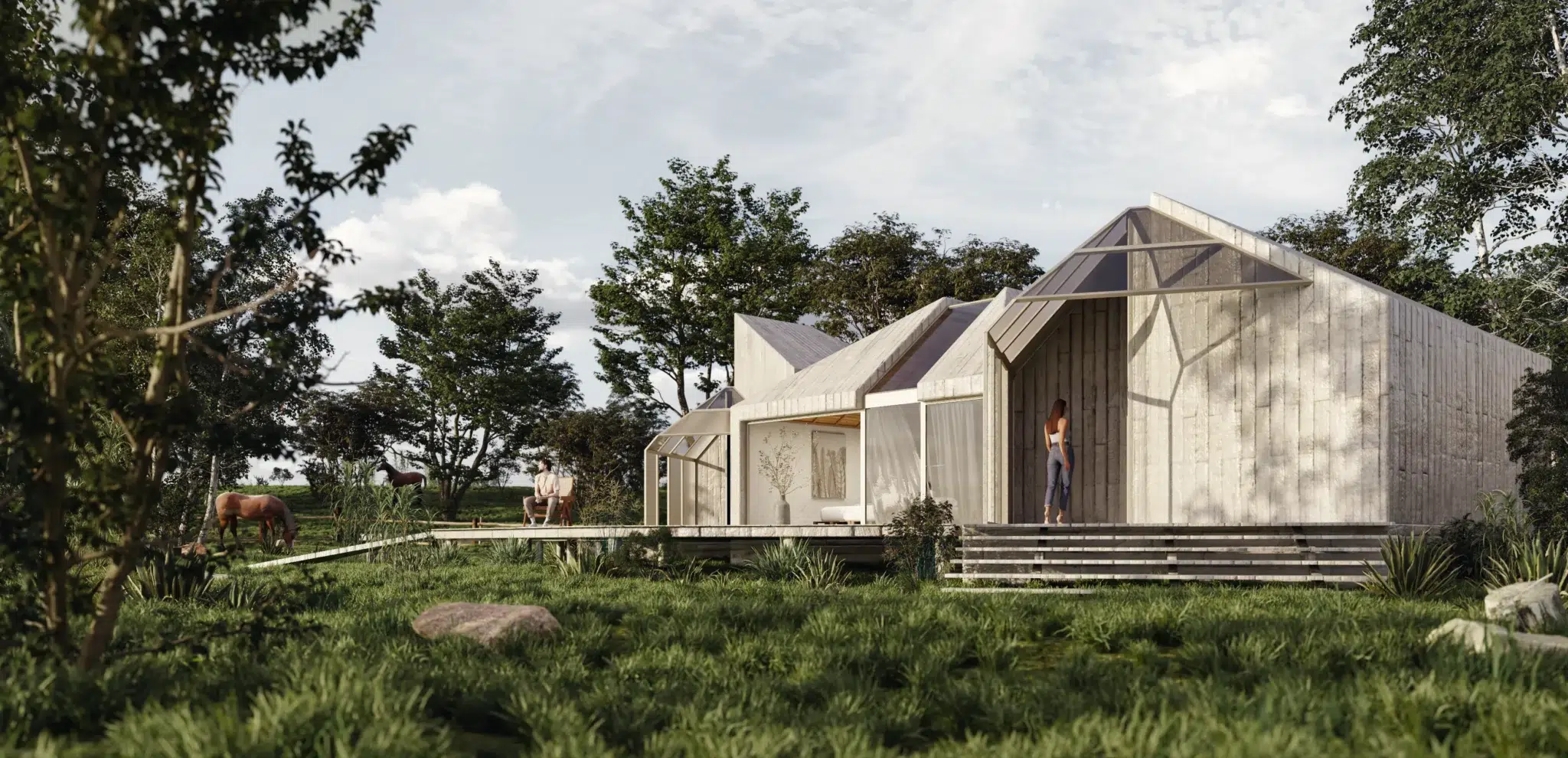
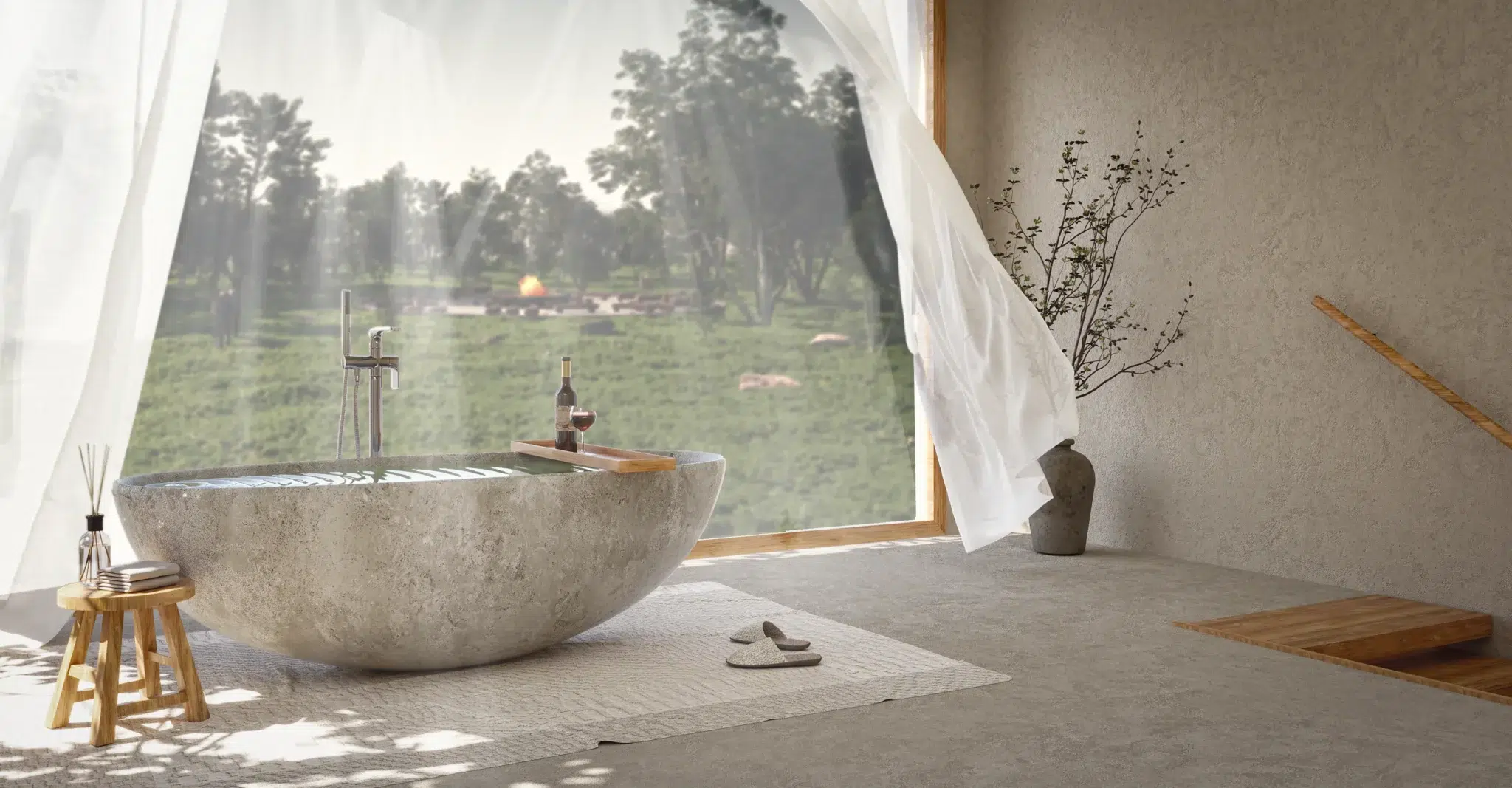
Therefore, the approach was developed across multiple layers simultaneously to ensure the presence of nature is maintained throughout the environmental experience. Large windows, interconnected terraces, and a central interior corridor enhance direct views of the plains from every point, while skylights introduce natural daylight and glimpses of the sky, maintaining a continuous visual connection with the surrounding landscape.

Another layer is boundary transparency, developed to blend the cabins into their surrounding landscape. To accomplish this, a lightweight locally timber structure and glass were designed, intentionally avoiding solid form. The cabins are placed on a 60-centimeter platform, permitting the natural growth of vegetation and the underlying ground cover to remain undisturbed.

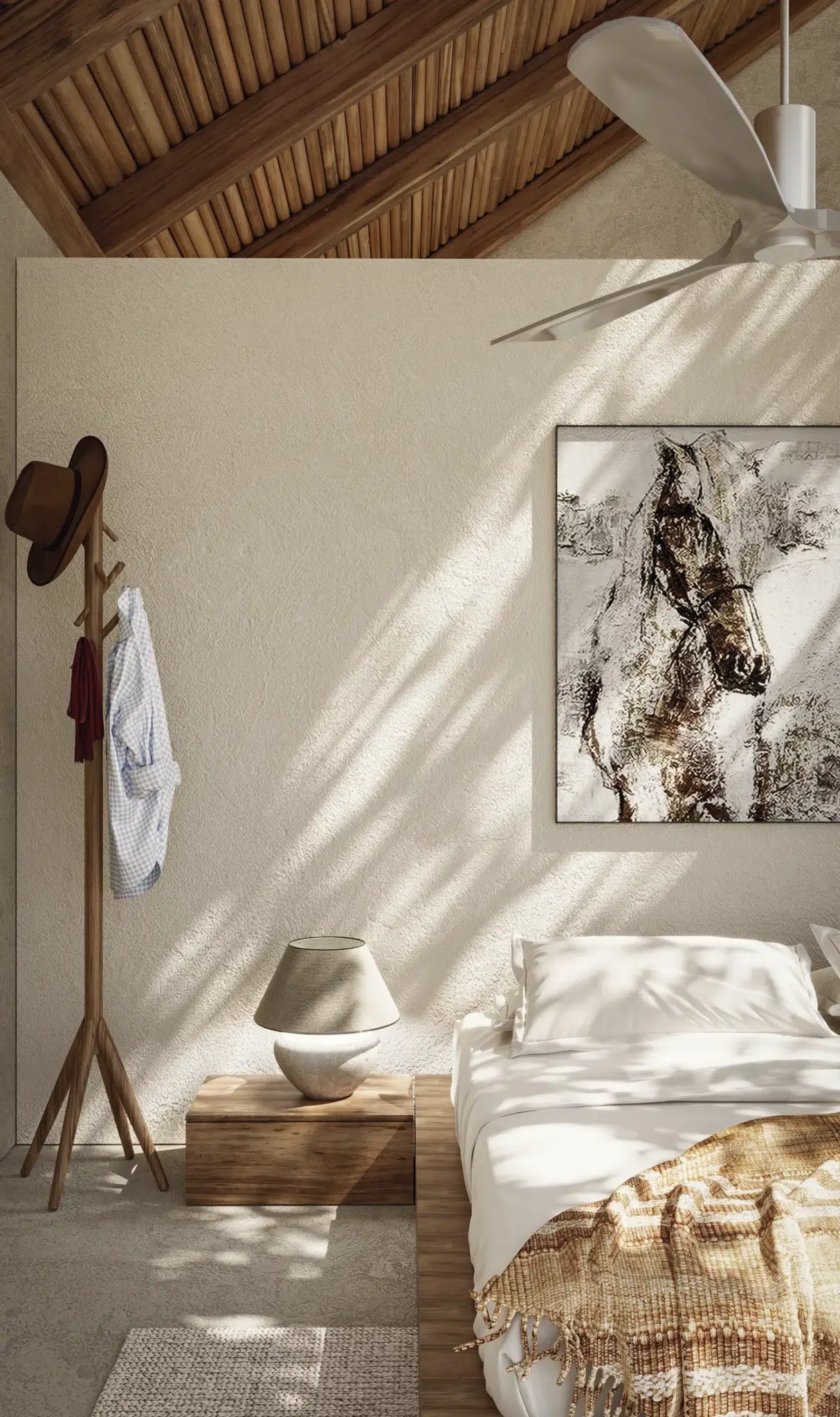
To maintain visual transparency and enhance continuous interaction with nature, the cabins were designed with terraces, porches, and an open-plan layout that enables seamless connection between interior and exterior. Considering the local climate and prevailing winds, a north–south orientation was selected for the cabins to ensure optimal natural ventilation.

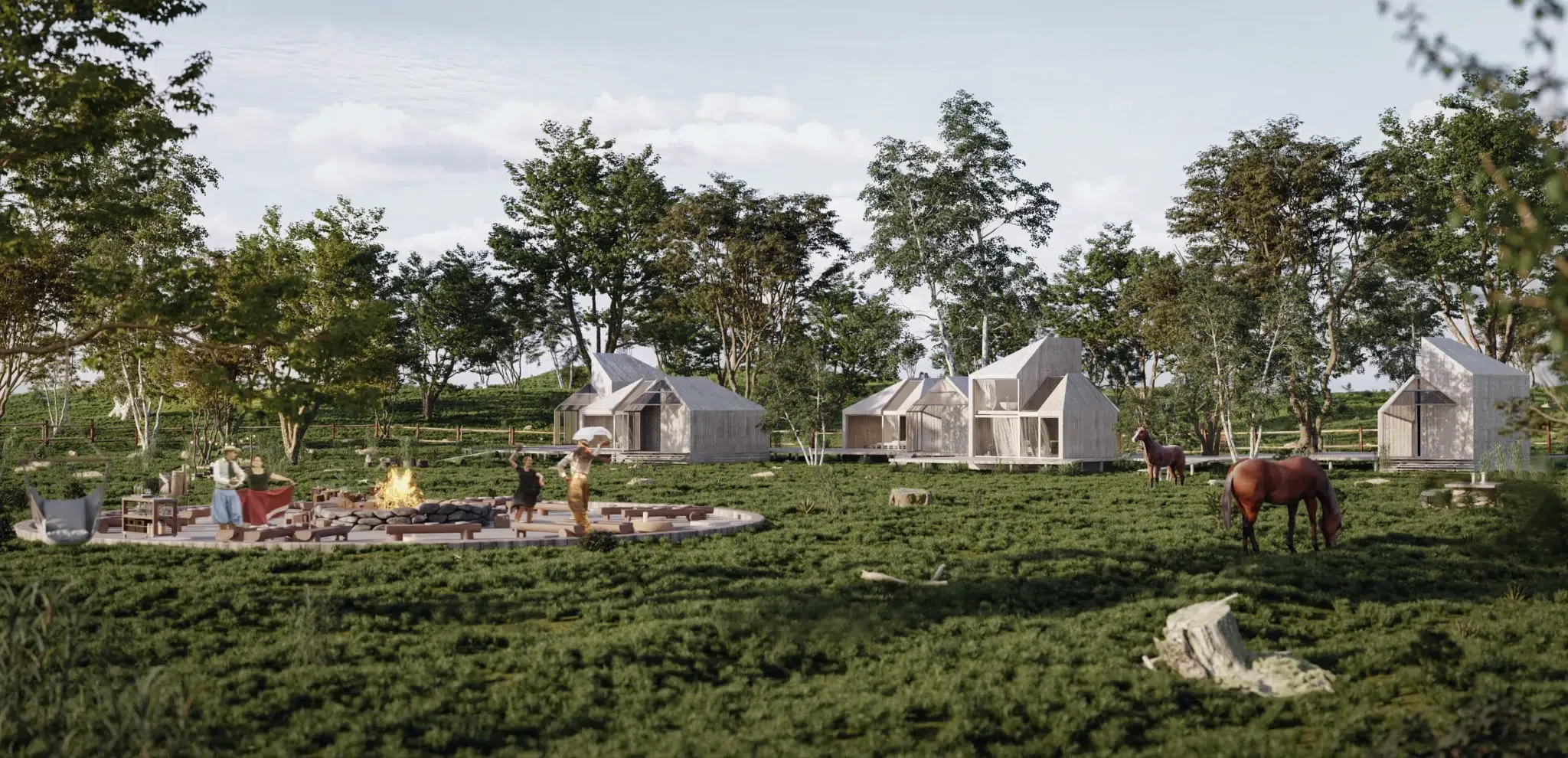
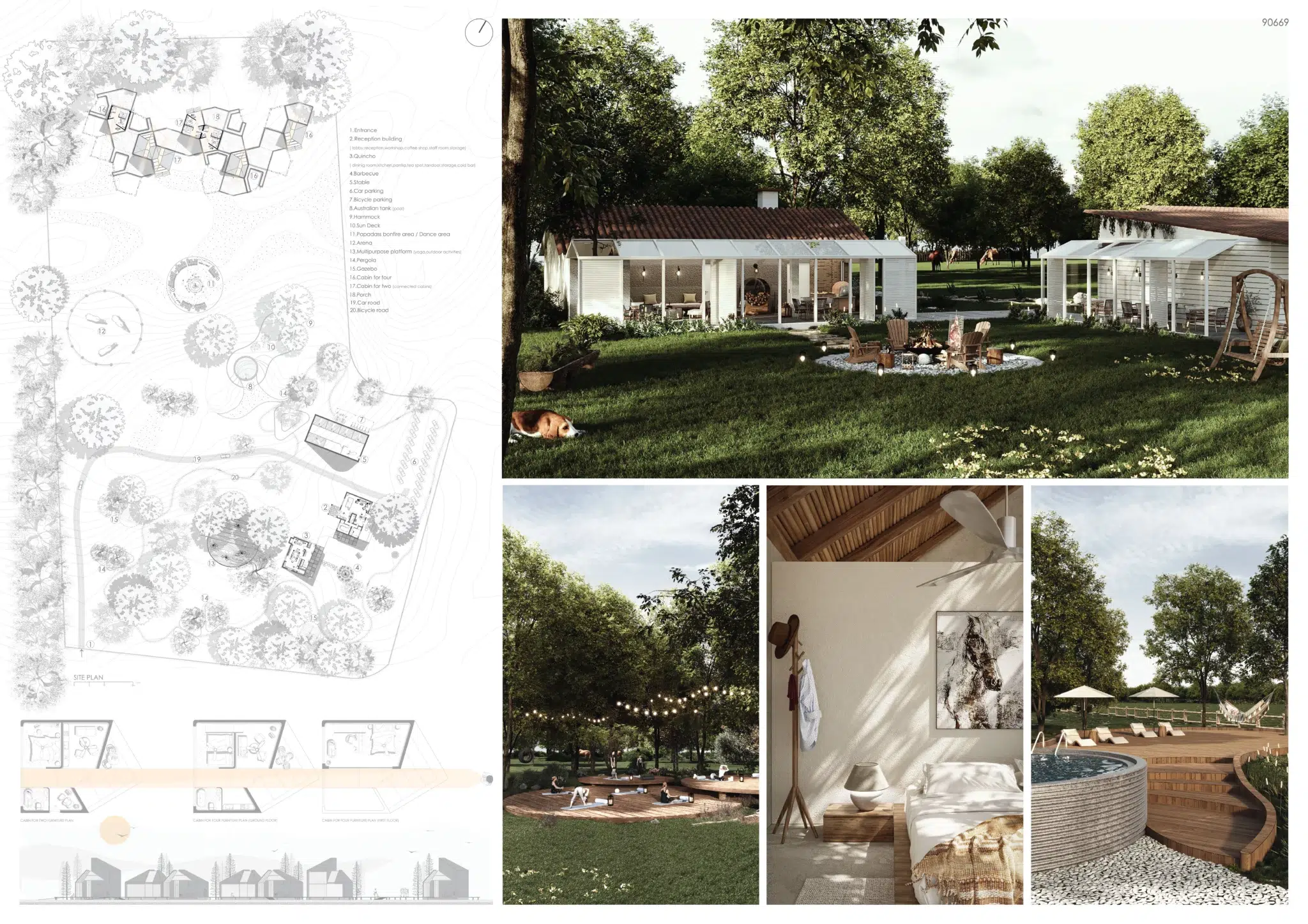
In the undeveloped northern section of the site, seven accommodation units were designed: four cabins for two guests and three cabins for four, resulting in a total capacity of 20 guests. The cabins for two are designed as connectable units, allowing them to operate individually or as a combined unit. Utilizing a single module and a unified architectural form for all units enhances the site’s identity and clarity, minimizes visual disruption within the natural landscape, and allows for flexibility in future expansion.

The existing buildings on the site were reinterpreted to preserve the local identity of the place:

• The reception building, incorporating a lobby, staff room, workshop, coffee shop, and storage, was redesigned to function as the operational heart of the complex.
• The quincho was transformed into a space for indoor and outdoor grilling, along with a communal dining hall, enhancing opportunities for social interaction.
• The storehouse was repurposed as a stable, allowing visitors to engage with Gaucho culture and experience horseback riding.

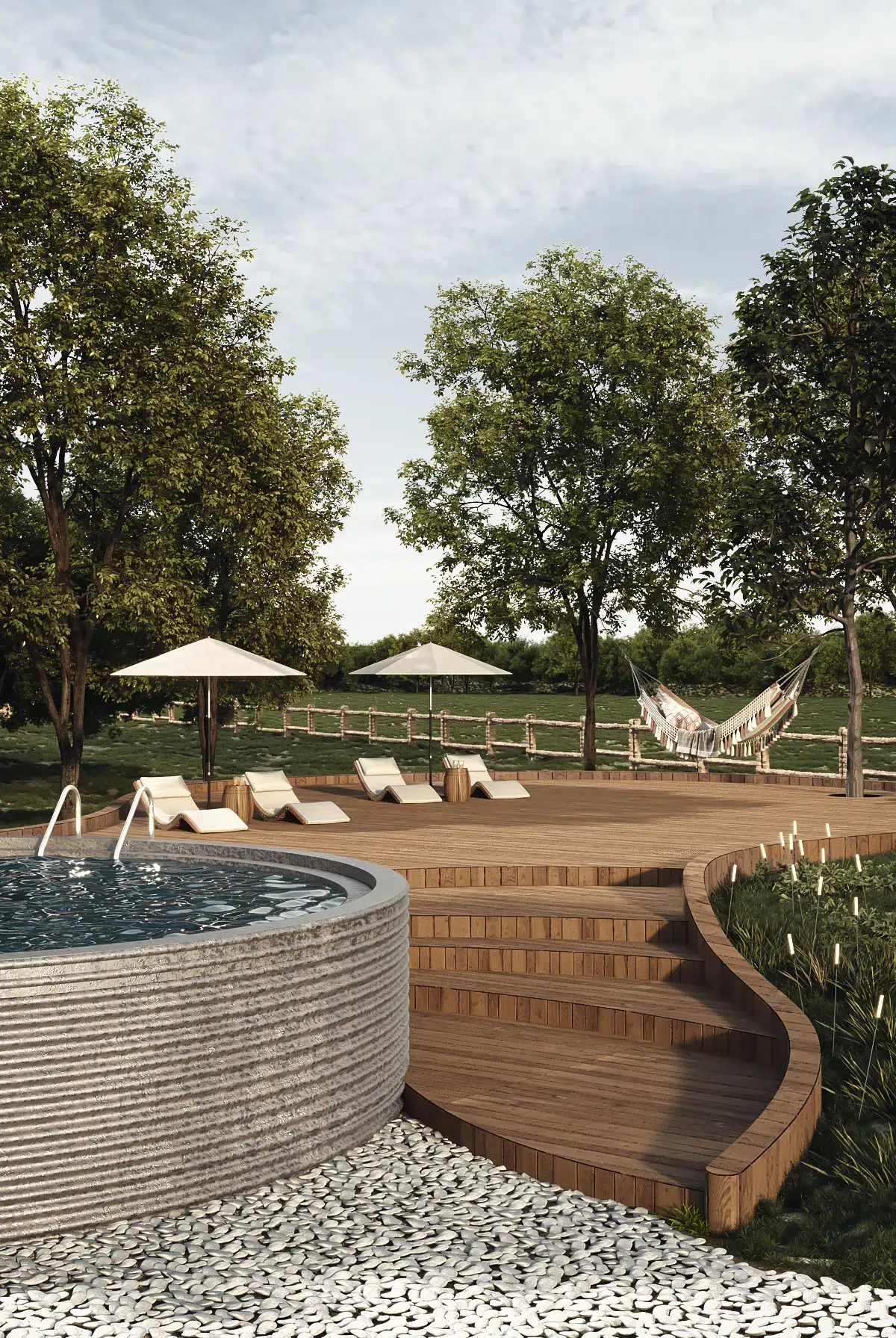
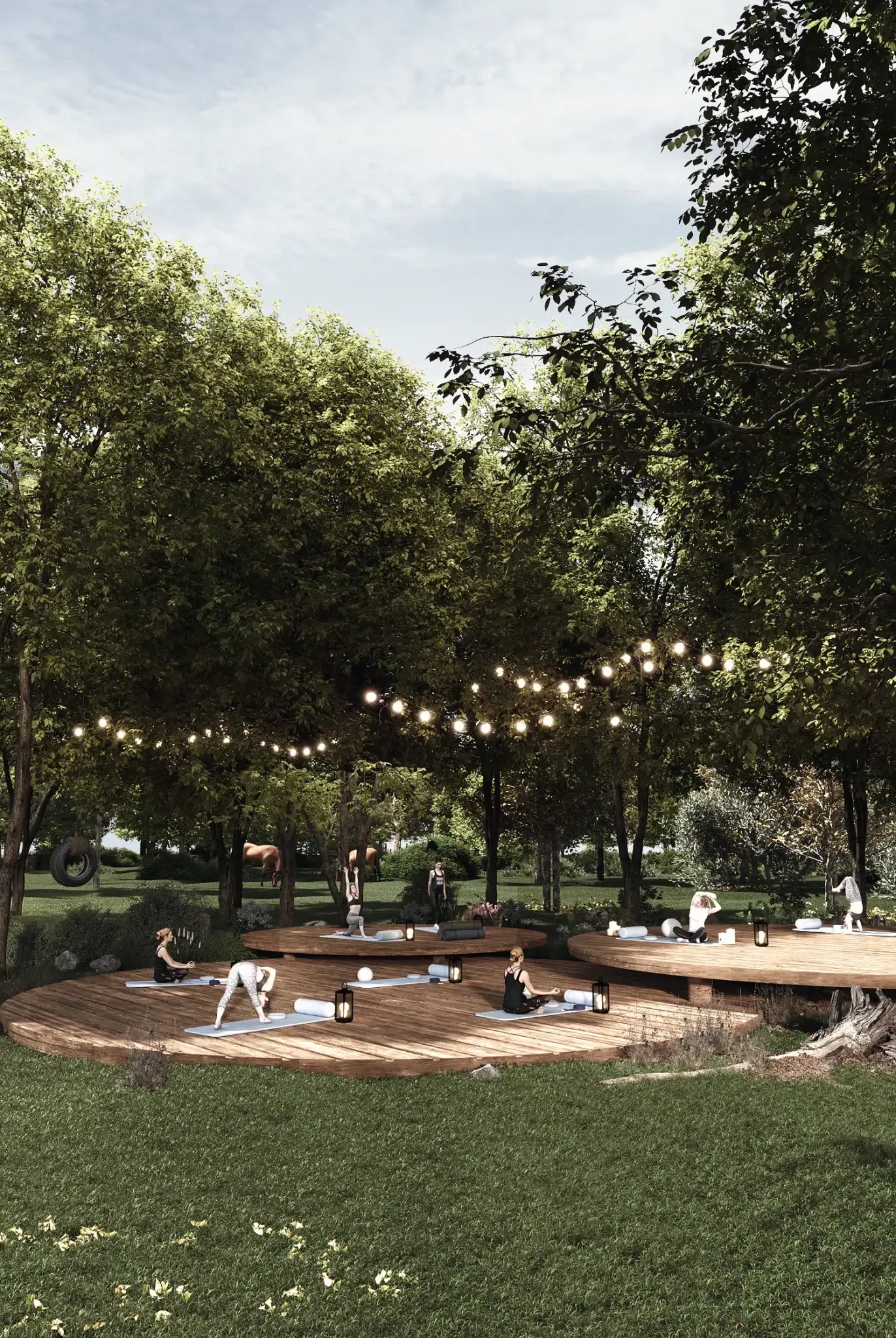
The Australian tank has been converted into a sun deck for swimming and outdoor leisure. Along the central axis of the accommodation units, an area for a Papadass bonfire is designed, accompanied by folkloric music and dance to encourage communal activities and gatherings. In the southern part of the site, where tree density is higher, a multipurpose platform for yoga and meditation, along with a bicycle path, provides a more engaging nature experience.

This zoning creates quiet, private spaces and dynamic, social areas for a balanced retreat experience.

//